

Efficient Aging
Stay capable for life.
Efficient aging is my term for keeping as much strength, fitness, balance and metabolic health as you can, for as long as you can, with the least wasted effort. It is not about looking younger. It is about staying capable.
Okinawa
The Okinawa Method
I spent close to two decades living in Okinawa, Japan, an island once known for having one of the highest rates of centenarians on earth. I went there as a Marine. I left as a student of how human beings age.
In 2017 I began writing my book, Unlocking Optimal Health. The philosophy in it came from years of training people, studying exercise science and watching how the healthiest people around me actually lived. Mindset came first. Then the people you surround yourself with, what I call Positive Circles. Then nutrition, fasting and movement, including walking after meals.
Then I sat down with Dr. Makoto Suzuki, who founded the Okinawa Centenarian Study in 1975 and followed Okinawan elders for decades. I interviewed him on several occasions about efficient aging and Okinawan longevity, covering gut microbiota, hydroxyproline and how it is regulated in the blood, and much more. I also trained with and worked on aging research alongside Youji Odagawa. What I found in Okinawa was not a new philosophy. It was confirmation. The elders were living the principles I had already been writing about, and Dr. Suzuki’s decades of work showed what that way of life produces: long lives, lived well.
I also keep in regular contact with Christal Burnette, a health and plant specialist at the Okinawa Research Center for Longevity Science, who worked alongside Dr. Suzuki and carries his teachings forward. Our ongoing conversations keep me current on the newest research coming out of Okinawa, so every UHP program reflects what we know today, not what we knew decades ago.
I did not borrow his conclusions. I found my own reflected in his evidence, and I built on that foundation. That is efficient aging: not chasing youth, but spending your energy, your food and your years wisely. Every UHP efficient aging program rests on five pillars, each drawn from my book, confirmed in Okinawa and matched to modern research.
The Five Pillars
01
Mindset and purpose: ikigai
Chapter one of my book is mindset, because nothing else holds without it. Okinawans call it ikigai, the reason you get up in the morning. For one elder it was a garden. For another it was grandchildren, a craft, or teaching the next generation. It was never a slogan. It was a daily reason to stay engaged, social and moving.
The research agrees. In a large Japanese cohort, adults who reported no sense of ikigai had higher death rates over the follow up period than adults who did. Purpose is not a soft idea. It is the variable that decides whether someone follows through. So before we write a single workout, we find out what you are training for: playing with your grandchildren, staying independent, getting back in the ring. Everything else is built around that answer.
02
Positive circles: moai
My second chapter is Positive Circles, the people who lift you up or pull you down. Okinawans built this into their culture. They formed moai, small groups of lifelong friends committed to supporting one another financially, emotionally and socially for decades. When I saw it, I recognized exactly what I had been writing about.
The evidence on social connection is among the most consistent in aging research. Isolation is tied to higher rates of cognitive decline, heart disease and early death. We assess your social health at intake alongside your physical health, and we help you build the relationships and community that keep you on track.
03
Calm under pressure: nankurunaisa
Okinawan elders were not spared hardship. Many lived through war, poverty and loss. What set them apart was how they carried it: through community, faith, humor and a long view of life captured in one phrase, nankurunaisa, “it will work out.”
The science is clear. Chronic stress keeps cortisol elevated, speeds up markers of cellular aging and worsens heart and metabolic health. We treat stress as a measurable health factor, not an afterthought. We screen for it at intake, track it across sessions and adjust your plan when it climbs.
04
Eat with restraint: hara hachi bu and fasting
Chapter three of my book is nutrition and fasting. In Okinawa I saw the principle in its oldest form: hara hachi bu, stopping a meal when you are about 80 percent full. Their traditional diet was low in calories and rich in nutrients: sweet potatoes, vegetables, seaweed, tofu and fish, with pork eaten in controlled portions. They were not vegetarian. They were disciplined.
We turn that discipline into a modern tool: time restricted eating, eating within a set daily window. Pooled studies show it can reduce body weight and improve markers such as fasting glucose. Your eating window and food targets are set to your labs, medications and goals, and our licensed clinical team reviews anyone with diabetes or another medical condition before you begin.
05
Walk after you eat
Walking after meals has been part of my teaching for years. In Okinawa I watched it happen without anyone calling it exercise. In the records and routines I have seen, many elders said flatly that they did not exercise. Yet they walked everywhere, farmed, gardened and stayed on their feet after they ate. Movement was not a workout. It was life.
Modern research shows why it works. A pooled analysis of controlled studies found that light walking after a meal lowers the blood sugar spike that follows eating, even in short bouts. Repeated daily, that one habit adds up to better metabolic health over years. Every UHP program includes an after meal walking plan built around your schedule, alongside strength, balance and mobility training matched to your assessment.
Bring Okinawa Home
You do not have to move to Okinawa to age the way its elders did. You need a reason to get up, people who lift you, a calm mind, a plate with limits and a walk after dinner. I wrote those principles down years ago. Okinawa proved them. UHP turns them into a measured, research backed plan, overseen by our in house licensed clinical team.
Book a Discovery CallOKINAWA
The People Behind the Research
Efficient aging was shaped by people who have spent their lives studying, training and living Okinawan longevity. These are the colleagues I have learned from and worked with.
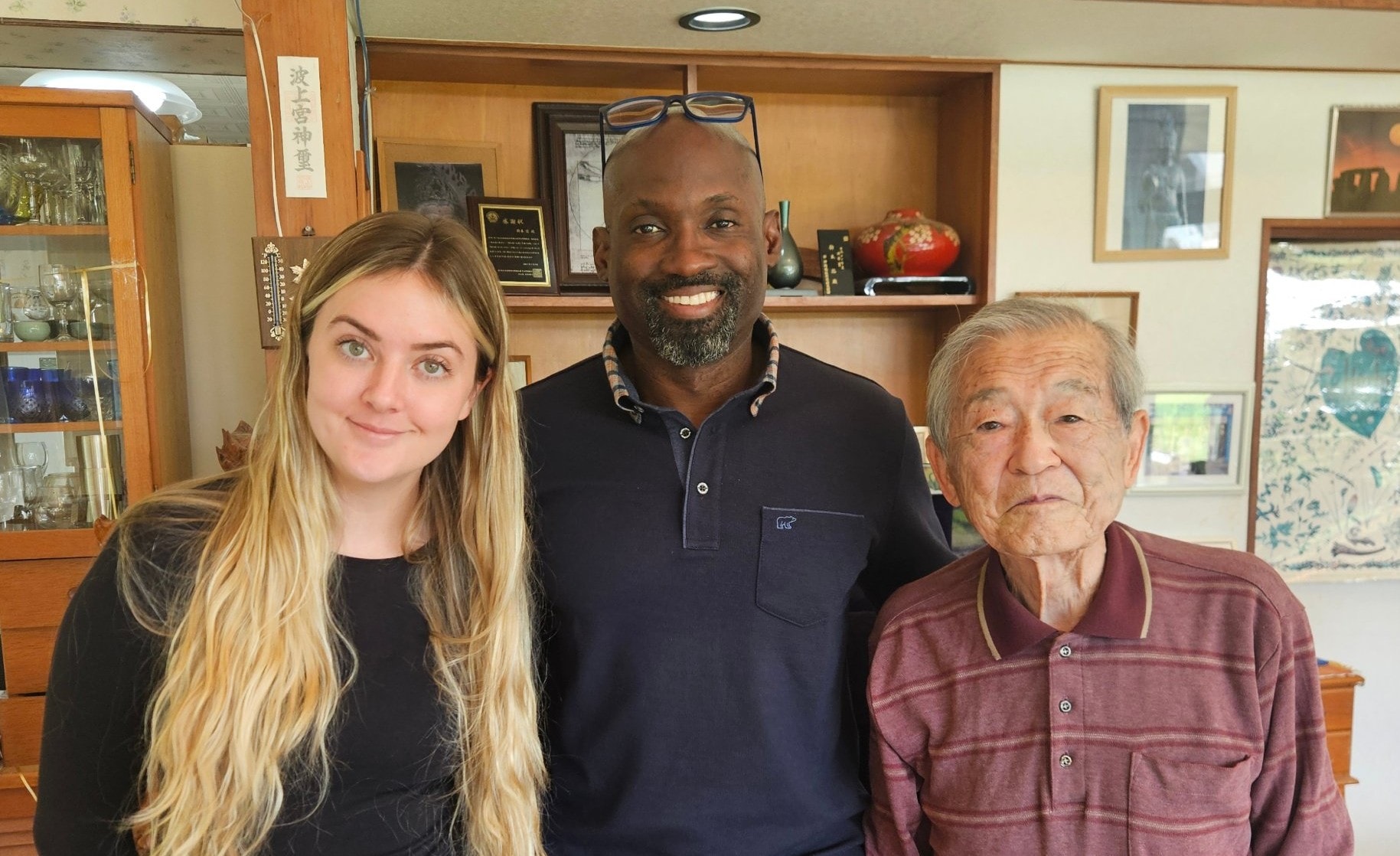
Dr. Makoto Suzuki, MD, PhD
Founder, Okinawa Centenarian Study
A cardiologist and geriatrician, Dr. Suzuki launched the Okinawa Centenarian Study in the mid 1970s, one of the longest running population studies of healthy aging in the world. He is Professor Emeritus at the University of the Ryukyus and founded the Okinawa Research Center for Longevity Science in 1997. His work highlighted the habits behind Okinawa's low rates of heart disease, cancer and cognitive decline: eating until 80 percent full, daily movement, social connection and purpose.
My Connection
I have interviewed Dr. Suzuki on several occasions about efficient aging, Okinawan longevity, gut microbiota and more.
Christal Burnette
Health and Plant Specialist, Okinawa Research Center for Longevity Science
Christal holds a master's degree from the Graduate School of Agriculture at the University of the Ryukyus, specializing in Okinawan plants and their health effects, and is a certified Japanese medicinal food (yakuzen) advisor. At the research center founded by Dr. Suzuki, she interviews Okinawan elders in Japanese and leads longevity education. She is also an author and international speaker on Okinawan longevity and ikigai.
My Connection
We stay in regular contact on the newest longevity research coming out of Okinawa. Christal has been a key collaborator in my understanding of Okinawan plant medicine and longevity education.
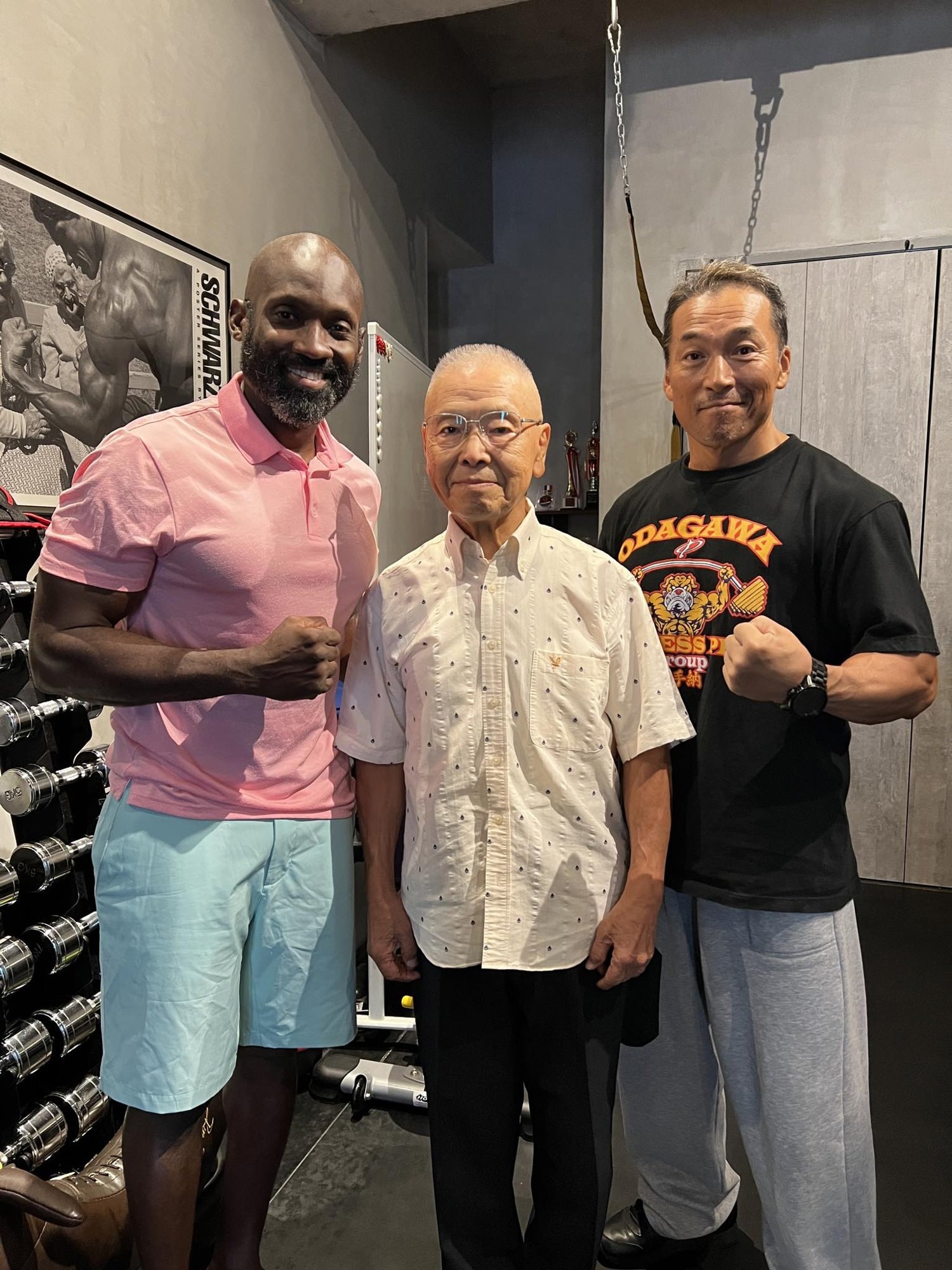
Youji Odagawa
Founder, Odagawa Fitness Pro Group; President, Okinawa Bodybuilding and Fitness Federation
A multiple time All Japan powerlifting champion who represented Japan at the International Powerlifting Federation World Championships, Youji is also a decorated bodybuilder, including Mr. Okinawa. He spent years training service members through Marine Corps Community Services in Okinawa before building his own gyms, where strength training is paired with nutrition guided by blood work and gut health conditioning.
My Connection
He mentored me and set me on the path I am on today. We have collaborated on aging research in Okinawa from 2018 to present.
Okinawa
Learning From Okinawa
Listed to recognize their work and influence. This does not imply their endorsement of UHP programs.
Video
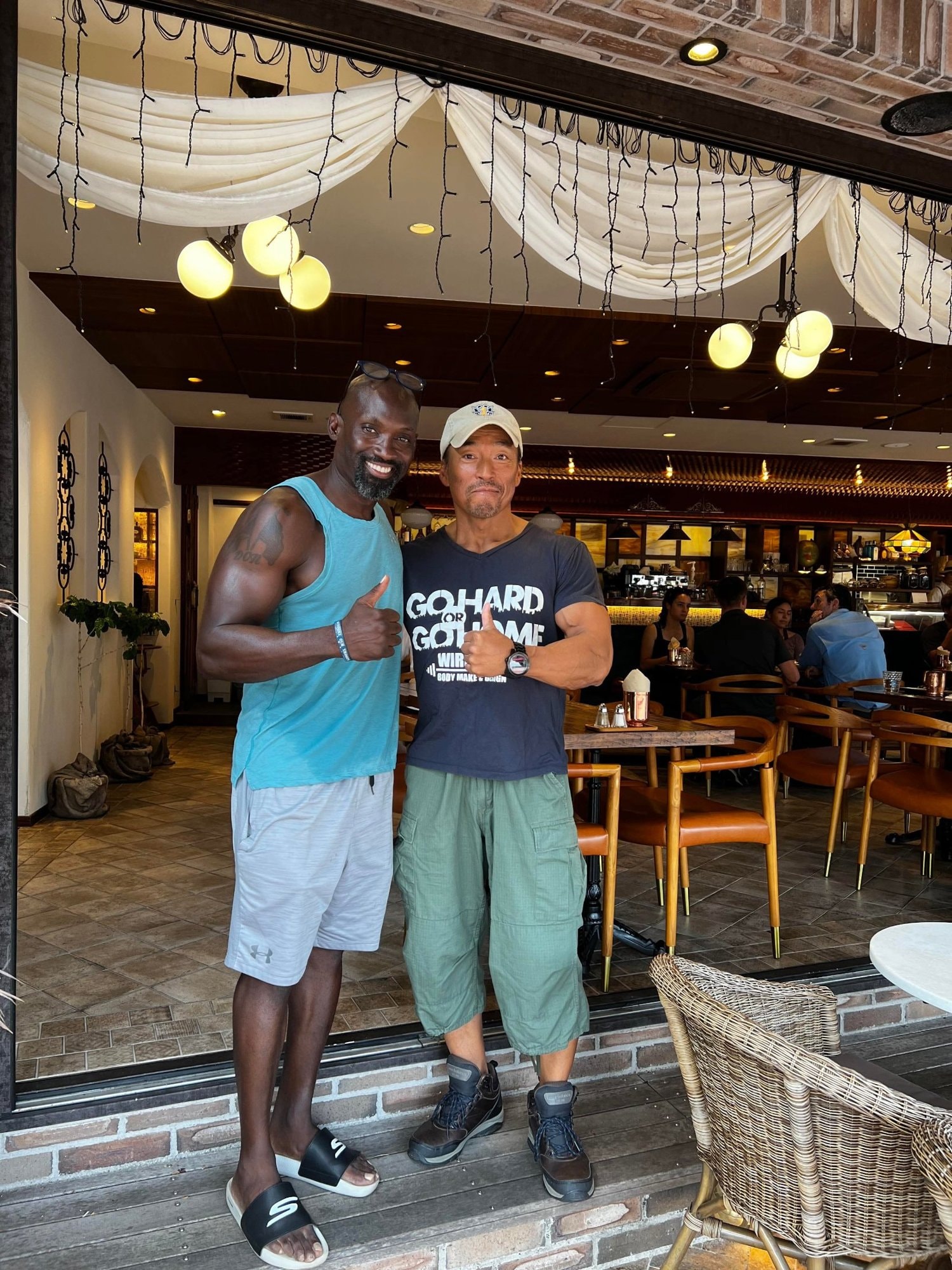
Exercise demonstration shoot with Youji Odagawa, Okinawa.
What Changes
What aging does, if you let it
Muscle and strength
Adults lose muscle and strength over time, and the loss tends to speed up later in life. Strength is what gets you out of a chair, up the stairs and off the floor.
Aerobic fitness
Heart and lung fitness declines with age. Research ranks it among the strongest predictors of how long people live.
Balance
Balance fades quietly. Falls are a leading cause of injury in older adults.
Metabolism
Less muscle and less movement make it harder for your body to handle blood sugar.
What Works
What the research supports
- 01
Strength training at least two days a week.
- 02
Regular aerobic exercise you can sustain.
- 03
Balance practice, built into your plan.
- 04
Enough protein and fiber every day.
- 05
Consistent, sufficient sleep.
None of this is new. The hard part is doing it consistently, safely and around real life. That is where I come in.
The Process
How I work with you
01
Discovery call
Free, 15 minutes. I learn your goals and answer your questions.
02
Assessment
A 90 minute video assessment: health history, movement screen and goals.
03
Your written plan
Healthy adults get an activity plan and coaching plan, in writing. If you have an injury or a chronic condition, you get a Clinical Exercise Prescription.
04
Weekly sessions
Coaching by secure video, adjusted as you progress.
05
Recheck
I retest your baselines so you can see what changed.
Programs
Efficient Aging Programs
4 weeks
Foundation
$1,450
Initial wellness intake and assessment, a written activity and habit plan, and four weekly sessions.
Book a discovery call8 weeks
Corrective Exercise
$2,850
For stiffness and movement imbalances. Corrective exercise assessment, Demotu motion analysis at the start and at week 8 included, a written corrective activity plan and eight weekly sessions.
Book a discovery call12 weeks
Transformation
$4,200
Initial wellness intake and assessment, a written activity plan with two updates, twelve weekly sessions and a week 12 reassessment.
Book a discovery call12 Months
Efficient Aging Annual
$6,900 a year or $625 a month
Our full year program. Initial intake, quarterly reassessments and Demotu motion analysis, two 60 minute coaching sessions a month, a written activity plan updated each quarter, message support, Library access, and an annual protocol review with our licensed clinician. Labs are an add on.
Book a discovery callClinical oversight is built in
Every program is backed by our in house licensed clinical team of nurse practitioners and registered nurses. If your progress stalls or something in your plan is not working, your coach brings your case to our clinical team for review and a recommendation, at no extra cost. When you need a clinician to examine, diagnose or prescribe, we schedule a clinician telehealth visit, billed separately or through your insurance where eligible. Clinician visits are available to adults located in Arizona.
All coaching is by secure video. You need a phone, tablet or computer and a little floor space. Recovering from an injury or living with a chronic condition? See Clinical Exercise Prescription.
See every price and what each program includes on the Pricing page.
Labs, blood draws and test kits are not included in any program and are available as add ons.
Sources: Willcox BJ et al. Caloric restriction, the traditional Okinawan diet, and healthy aging. Annals of the New York Academy of Sciences, 2007. Sone T et al. Sense of life worth living (ikigai) and mortality in Japan: Ohsaki Study. Psychosomatic Medicine, 2008. Moon S et al. Beneficial effects of time restricted eating on metabolic diseases: a systematic review and meta analysis. Nutrients, 2020. Buffey AJ et al. The acute effects of interrupting prolonged sitting time in adults with standing and light intensity walking on biomarkers of cardiometabolic health: a systematic review and meta analysis. Sports Medicine, 2022.
Get Started
Ready to stay capable?
Start with a free 15 minute discovery call. I will learn your goals and answer your questions.
Book a free 15 minute discovery call